West Virginia Hardiness Zones: Exploring Zones 5b Through 7a
West Virginia’s hardiness zones span a wide range, and a zone label can help you choose plants—but it cannot tell you exactly when to sow seeds or set out transplants. The key is knowing what the map measures, how elevation and yard conditions affect it, and when to use frost and soil conditions instead.
What West Virginia’s hardiness zones tell you
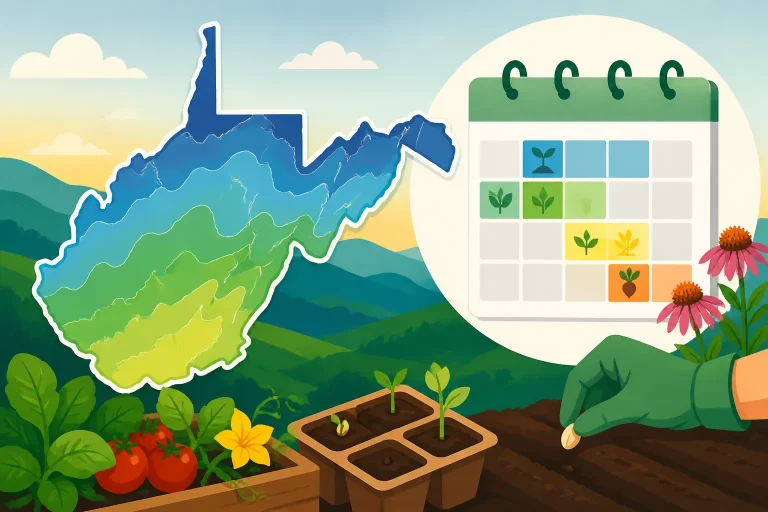
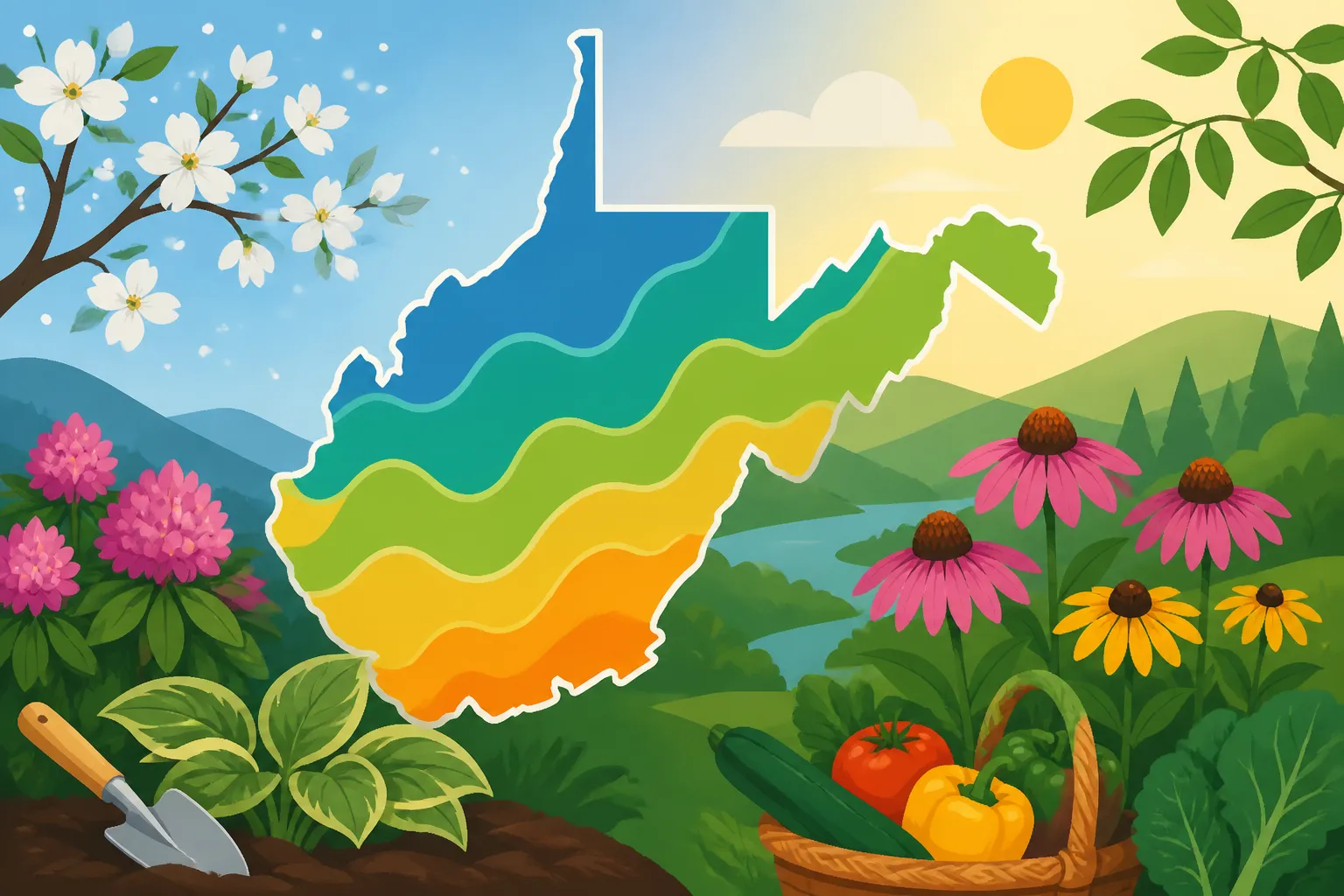
Areas of West Virginia fall in USDA Plant Hardiness Zones 5b through 7a. These labels describe the typical range of winter cold in an area, based on long-term weather data. They are most useful when you are choosing perennial plants, shrubs, and trees that need to survive winter outdoors.
A hardiness zone is not a promise about the coldest temperature your yard will ever experience. It is a way to compare locations by their usual winter minimums. A particularly cold winter can fall outside the range suggested by a zone, just as a mild winter does not guarantee the next one will be mild too.
The letter after a zone number divides that number into a smaller band. The numbers and letters help describe differences in winter cold, but they should be treated as a planning reference rather than a precise forecast for a particular garden bed. You can use the USDA map to get a starting point, then consider the conditions right around your home.
What the map is for
The map is primarily a winter-survival tool. When a plant tag or catalog lists a hardiness zone, it usually indicates the coldest zone in which the plant is expected to survive winter under suitable conditions. For example, if a plant is listed for a colder zone than your area, it may be a reasonable candidate for winter survival. If your area is colder than the plant’s listed range, the plant may be at greater risk.
That still does not guarantee success. A plant’s survival also depends on its health, age, soil drainage, exposure to wind, snow cover, and other growing conditions. Plants in a sheltered garden may have a better chance than the same species in an exposed spot. A plant that tolerates winter cold can also struggle in a site that stays waterlogged or lacks the light it needs.
Zones are especially helpful when comparing perennial options before buying them. They are less useful for deciding the date to plant a vegetable, because vegetable planting depends on spring and fall weather, crop needs, and soil conditions.
What the map does not tell you
A hardiness zone does not give you:
- The date of the last spring frost or the first fall frost
- The length of a reliably warm growing period
- When soil is dry or warm enough to work
- How much sun or shade a garden receives
- Whether a site drains well
- How often a plant needs water
- Whether a plant is suited to local pests or diseases
For those questions, you need a different kind of information. For planting schedules, start with When to Plant in West Virginia: Safe Dates for Every Region and West Virginia Freeze Dates: Average Spring and Fall Normals. For a closer look at how map zones and sowing schedules differ, see Hardiness Zones and Sowing Schedules: What USDA Maps Actually Show.
Why zones vary across West Virginia
West Virginia’s range from Zone 5b through Zone 7a reflects substantial differences in winter conditions across the state. The landscape includes mountains, ridges, valleys, and lower-lying areas, and these features affect local weather. A statewide range gives useful context, but it does not mean every part of a county or community has the same conditions.
Elevation is one important influence. Higher places can experience colder conditions than nearby lower areas. But elevation is only part of the picture. Cold air can settle in low spots on calm, clear nights, while a slope or a site with good air movement may behave differently. A garden’s exposure, nearby buildings, tree cover, and local drainage can all contribute to its own small-scale climate.
These local effects matter because a map assigns a broad category to an area. It cannot represent every hillside, hollow, or sheltered backyard. Even two gardens close together can have different levels of exposure to wind, sunlight, cold-air pooling, and winter wetness.
Understanding microclimates
A microclimate is a smaller area with growing conditions that differ from the surrounding area. In a home garden, microclimates may occur beside a building, under a tree canopy, on a slope, near a paved surface, or in a low spot where cold air gathers.
A south-facing wall may warm up in sunlight and provide shelter from wind. A shaded hollow may stay cooler and damp longer. A ridge-top garden may be more exposed to wind than a bed protected by a building or hedge. These differences do not change the zone shown for the larger area, but they can affect whether a particular plant thrives.
Try observing your site through the seasons before making a large planting plan. Note where snow lingers, where water collects after rain, which beds warm first in spring, and which areas get the strongest afternoon sun. These observations help you match plants to the conditions you actually have.
For more detail on local variation, Why West Virginia Freeze Dates Vary by Elevation and Valley Slopes explains why cold and frost risk can differ even within the same general area. Matching Your Garden Calendar to Local Frost Dates and Elevation is also useful when you are deciding when to work with seasonal weather rather than relying on a zone label alone.
Why a ZIP code is only a starting point
A ZIP code lookup can help you find the general hardiness zone associated with an area, but it cannot identify the conditions of a particular garden. ZIP-code boundaries are made for mail delivery, not for describing slopes, cold-air drainage, or yard-level exposure. A result can also cover a broader area than the space you are planting.
Use a lookup as an orientation tool, then compare it with the USDA Plant Hardiness Zone Map and your own site observations. Avoid treating a zone result as a precise prediction for an address or a guarantee of a plant’s performance. How to Look Up Your Exact West Virginia Hardiness Zone by ZIP explains how to use a ZIP-based lookup while keeping its limits in view.
Choosing plants with your hardiness zone
For long-lived plants, use the zone on a plant label as an initial screening check. Compare the plant’s listed hardiness range with the range for your area, then consider the growing conditions the plant needs. This can help narrow a large selection, but it should not be the only factor in your decision.
A useful approach is to check three things before buying:
- Winter suitability: Does the plant’s listed hardiness range include the zone for your area?
- Site fit: Does your garden offer the light, moisture, drainage, and space the plant needs?
- Ongoing care: Can you provide the pruning, watering, or other care the plant is likely to require?
If the answer to the first question is yes but the other two are no, the plant may still be a poor match. A hardy plant can fail if its roots remain wet, it receives too little light, or it outgrows its location. Conversely, a plant near the edge of its listed range may do better in a sheltered, well-drained site than in an exposed one. That is a possibility, not a guarantee.
Perennials, shrubs, and trees
Hardiness zones are particularly relevant to plants that remain outdoors through winter. When selecting a perennial, shrub, or tree, check the full range on the label rather than looking only for a single zone number. Labels and listings can present information in different ways, so confirm what the listed range means.
For woody plants, consider how the site changes over time. A young tree or shrub may have different needs from an established one. A sheltered spot can protect plants from some wind exposure, but it does not make a poorly drained planting site suitable. Make sure there is room for mature growth and that the plant’s soil and light requirements are compatible with the location.
If you are choosing a plant that is marginal for the zone shown on the map, think about the consequences of losing it in a harsh winter. You might place it in a protected location, try it in a container that can be moved, or choose a more reliably hardy alternative. The best choice depends on how much winter risk you are willing to accept and how much effort you want to put into protection.
Annual vegetables and flowers
Most annual vegetables and flowers are planted, harvested, or replaced within a single growing season. For these plants, zone information may help with broad decisions about what is likely to fit the region, but it does not give you a sowing or transplanting date.
A tomato that can grow in your zone still needs suitable conditions to establish and produce well. Setting it out into cold soil or during a spell of frost risk can damage it. Similarly, cool-season crops and warm-season crops have different temperature needs. Their timing depends on the season and current conditions, not simply on whether a garden falls in Zone 5b, 6, or 7a.
For vegetables, use planting calendars and crop-specific advice. West Virginia Vegetable Planting Calendar and Frost Guide brings those considerations together, while Does Your West Virginia Hardiness Zone Determine Planting Dates? addresses the common mistake of using the hardiness map as a planting calendar.
Hardiness zones are not frost dates or planting dates
A hardiness zone describes typical winter cold. A frost date describes the likelihood of a spring or fall frost around a particular location and period. The two measures answer different questions.
A zone can help you judge whether a perennial might survive winter. A frost-date estimate can help you plan around the risk of a damaging frost. Neither gives an exact date that is guaranteed to be safe. Frost dates are probabilities, and actual weather varies from year to year.
This distinction is important when planning vegetable beds. A warm-season crop may be hardy enough to grow in a region but still be vulnerable to cold conditions at the time you want to plant it. A cool-season crop may tolerate cooler weather but still need workable soil and a suitable growing window. The calendar helps you identify a broad window; local weather and your garden conditions help you decide when to act.
How to choose a planting window
For each crop, check its preferred growing conditions and whether it is normally direct-sown or transplanted. Then compare the crop’s needs with local frost information and the state’s seasonal planting guidance. If you are starting seeds indoors, include the time seedlings need to grow and adjust before they move outdoors.
Pay attention to soil as well as air temperature. Wet, cold soil can delay sowing or transplanting even when daytime temperatures seem pleasant. Walking on or working soil that is too wet can also damage its structure. A bed that drains well and warms quickly may be ready before a shaded or compacted one nearby.
Protective covers can reduce exposure to chilly nights, but they do not eliminate weather risk. A cover must be managed according to conditions, especially when days are sunny and temperatures rise. The article Managing Low Tunnels to Protect Spring Crops from Sudden Night Chills explains how a low tunnel can fit into early-season planning.
Use different information for different decisions
This table summarizes which information to use for common garden choices:
| Garden decision | Most useful information | What a hardiness zone contributes |
|---|---|---|
| Choosing a perennial, shrub, or tree | Plant hardiness range, site conditions, and care needs | A first check on likely winter survival |
| Sowing vegetable seeds outdoors | Crop requirements, planting guidance, soil condition, and weather | Broad regional context, not a sowing date |
| Setting out warm-season transplants | Frost risk, soil warmth, and plant readiness | Limited help with timing |
| Planning a fall vegetable crop | Crop maturity needs, planting window, and first-frost risk | Broad context for winter conditions |
| Deciding whether to protect a planting | Forecast, plant sensitivity, and cover requirements | A reminder of the area’s general winter range |
| Comparing two garden beds | Sun, slope, drainage, exposure, and observed conditions | A shared regional reference, not a yard-level diagnosis |
When a decision involves a specific crop or season, use a crop-specific article rather than trying to derive a date from the zone map. For example, When to Plant Warm-Season Crops Across West Virginia focuses on warm-season timing, while West Virginia Fall Planting Guide: Best Crops and Late-Season Timing addresses fall planting choices.
Finding and using your local zone
Start with the USDA Plant Hardiness Zone Map. Find the general area where you garden and note the zone shown. If you use a ZIP lookup, treat its result as a clue rather than a measurement of your yard. Then look closely at the planting site and consider whether its elevation, exposure, or terrain might make it behave differently from nearby areas.
Keep a note of the zone you find, but record garden conditions separately. It can be helpful to write down:
- Whether the bed is on a ridge, slope, or low area
- How much direct sun it receives and at what time of day
- Where winter wind tends to come from
- Whether rainwater drains promptly or remains on the surface
- Where frost seems to linger
- Which areas warm earliest in spring
- Whether nearby walls, trees, or paved surfaces affect the bed
These details are useful because they help you make decisions the map cannot make. If one bed is sunny, sheltered, and well drained while another is shaded and damp, the same zone label will not make the beds equally suitable for every plant.
Keep records over time
Weather changes from season to season, so a single winter or spring is not enough to judge a garden’s typical behavior. Record what you observe over several seasons. Note when frost occurs in different parts of the yard, which plants show winter damage, and whether the soil is usually workable when you hope to sow.
These records do not replace regional weather data, but they can help you notice recurring patterns. For example, a low bed may repeatedly experience frost later than a nearby slope, or a sunny, sheltered area may support earlier growth. Use that knowledge cautiously: a warm spring can still be followed by a cold spell, and a sheltered area is not immune to frost.
If you want to compare broad regional patterns, West Virginia Hardiness Zones: Exploring Zones 5b Through 7a is the topic of this article, and Where Colder Zone 5b and Warmer Zone 7a Pockets Fall in the State offers a related look at the statewide range. For yard-scale differences, How Slope Aspect Alters Spring Thaw and Planting Schedules can help you think through how slope direction affects when a garden warms.
Recheck before making a major planting decision
Hardiness maps can be updated as the underlying climate information changes. If you are planning a long-lived landscape, verify the map you are using rather than relying on an old label, a remembered zone, or a number copied from an older gardening book.
A map update does not automatically mean an established plant should be removed. If it is growing well, has survived local winters, and suits its site, the map is only one piece of information. For advice on established plantings, see Do You Need to Replace Established Plants After a Zone Map Update?.
Before planting a large number of expensive trees or shrubs, check the current map, read the plant’s hardiness information, and assess the site. If the plant is near the edge of its stated range, consider starting with one or a small number before committing to a whole border. That lets you judge how the plant responds in your conditions without making the zone label carry more weight than it should.
Common mistakes when reading the map
The most common mistake is treating a zone as a complete growing calendar. It is not. A zone tells you about typical winter cold, not whether the soil is ready for seeds or whether a transplant can safely go outdoors. Use seasonal planting guidance and frost information for those decisions.
Another mistake is assuming every yard in a mapped zone behaves alike. A map cannot show the sheltered corner behind a house, a wind-exposed ridge, or a low place where cold air collects. Look at the terrain and observe the garden instead of expecting the zone label to capture every local difference.
It is also easy to treat a zone boundary as a sharp line. Weather and plant performance do not change neatly at a boundary drawn on a map. A garden near a boundary may share conditions with nearby areas assigned another zone, while two gardens within the same zone may have different exposure and drainage.
Finally, do not assume that a plant is guaranteed to thrive just because its label includes your zone. Hardiness addresses winter survival, not every requirement the plant has. A plant can survive winter and still grow poorly because the site is too wet, too shady, too exposed, or otherwise unsuitable.
A more reliable way to use the map is to combine it with other information:
- Use the zone to screen perennial plants for winter suitability.
- Use frost information to plan around spring and fall cold risk.
- Use crop-specific guidance for sowing and transplanting.
- Check soil moisture, drainage, and temperature before working a bed.
- Observe differences between garden sites, even within one property.
- Recheck current map information before investing in long-lived plants.
This approach avoids a false choice between “the map is useful” and “the map is too general.” The map is useful for the question it was designed to answer. It becomes less useful when asked to answer questions about frost dates, crop timing, soil, or a particular backyard.
Frequently Asked Questions
What hardiness zones are found in West Virginia?
Areas of West Virginia fall in USDA Plant Hardiness Zones 5b through 7a. A local lookup can give you a starting point, but a zone does not describe every yard-level condition.
Does my hardiness zone tell me when to plant vegetables?
No. The map describes typical winter cold and can help with perennial plant selection. Vegetable planting dates depend on crop needs, frost risk, soil conditions, and the weather in a particular season.
Can two gardens in the same zone have different growing conditions?
Yes. Differences in elevation, slope, shade, wind exposure, drainage, and nearby structures can create microclimates. Those conditions can affect plant performance even when two gardens share the same mapped zone.
Should I remove a plant if a map shows a different zone than I expected?
Not automatically. Check the plant’s condition and its history in your garden. A zone map is one reference point; it does not prove that a healthy established plant must be replaced.
Disclaimer
This article is for general informational purposes only and does not constitute professional advice. Laws, prices and regulations vary by location and change over time. Consult a qualified professional for guidance on your specific situation. West Virginia Gardening Guide is not a government agency and is not affiliated with any university extension, state department of agriculture or other government agency.