West Virginia Planting Dates: Planning Your Harvest Windows
West Virginia gardeners often have to plan around more than a calendar: elevation, valley temperatures, wet soil, and sudden cold snaps can all shift a planting window. A useful schedule connects local conditions to the harvest you want, rather than treating one date as right for the whole state. Here’s how to plan spring, summer, and fall crops with flexibility built in.
Why West Virginia planting dates are flexible
A planting calendar is a planning tool, not a promise that a particular crop will thrive on a particular day. West Virginia’s mountains, valleys, slopes, and changing elevations create meaningful differences in spring warmth and fall cooling. A garden in a sheltered valley may be ready for outdoor work while a higher, exposed site nearby is still cold or wet.
Frost is only one part of the decision. Soil that is cold, saturated, or difficult to work can delay planting even when daytime air feels mild. Conversely, a warm, well-drained bed can be ready for some cool-season crops before a nearby shaded garden. The best schedule uses the calendar as a starting point, then checks conditions at the actual garden.
It also helps to separate three different questions:
- When can I sow or transplant? This depends on the crop’s tolerance of cold, soil condition, and local weather.
- When will the crop be ready to harvest? Seed packets and transplant labels give an estimated days-to-harvest period, but real conditions affect growth.
- Will it mature before heat or freezing weather? This is especially important for slow-growing crops and fall plantings.
Spring and fall freeze averages can help you estimate the length of a growing window, but they do not predict what will happen in a particular year. For context on how to use those averages, see West Virginia Freeze Dates: Average Spring and Fall Normals. For a closer look at how local elevation changes timing, use Matching Your Garden Calendar to Local Frost Dates and Elevation.
A practical West Virginia calendar therefore works in ranges. Start with the season and crop group, then adjust for your garden’s exposure, soil, and local forecast. If a schedule gives one date for the entire state, treat it as a broad reference rather than a deadline.
A seasonal planting calendar for West Virginia
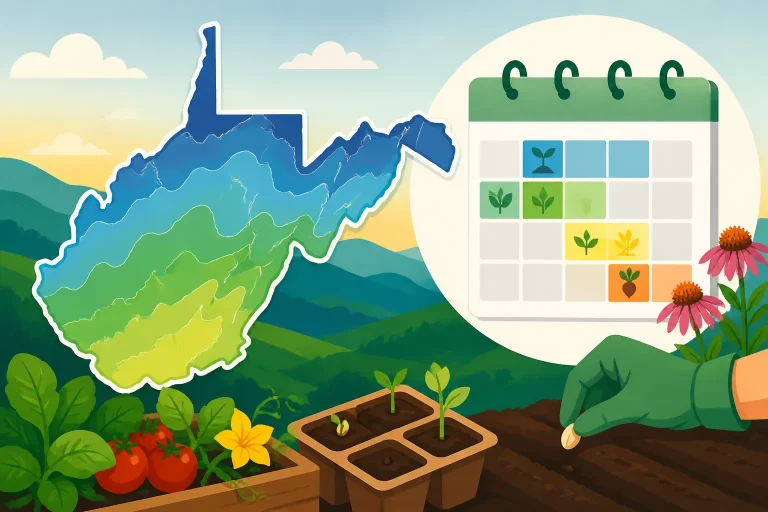
The table below is a general planning framework. It describes the order in which common garden tasks tend to fit, not fixed statewide planting dates. Local conditions can move a task earlier or later, particularly in mountain areas and frost-prone valleys.
| Season or period | What to consider planting | What to check first | Planning purpose |
|---|---|---|---|
| Late winter to early spring | Cold-tolerant crops such as peas, spinach, and some other greens | Whether the soil is workable and not saturated; local cold conditions | Begin the cool-season harvest |
| Early to mid-spring | More cool-season vegetables, including roots and leafy crops | Soil readiness, crop cold tolerance, and short-term forecast | Extend the spring harvest and prepare later beds |
| Mid- to late spring | Warm-season crops as conditions become suitable | Remaining frost risk, warmed soil, and nighttime temperatures | Start crops that need warmth to grow well |
| Early summer | Additional warm-season sowings and succession crops | Heat, moisture, available garden space, and days to harvest | Keep production going after early crops finish |
| Late summer | Selected quick-growing crops for autumn | Time remaining before the expected fall cold period | Establish crops that can mature in cooler weather |
| Early fall | Hardy greens and other suitable cool-season crops | Crop maturity time, forecast, and protection options | Harvest into cool weather and use open beds |
| Late fall | Mulch or other end-of-season garden work; some fall-planted perennial crops where suitable | Soil condition and crop-specific guidance | Protect soil and prepare for the next growing season |
The exact crops that fit each period depend on your intended harvest. If your priority is an early salad, sowing cold-tolerant greens in stages may make more sense than planting a large amount at once. If you want tomatoes, peppers, beans, or squash, waiting for dependable warmth is usually more useful than trying to gain a few days by setting them out in cold ground.
Use crop-specific schedules when you need a tighter window. When to Plant in West Virginia: Safe Dates for Every Region gives a broader regional view, while When to Plant Warm-Season Crops Across West Virginia focuses on crops that need warmer conditions. Those schedules still need to be checked against the conditions at your own site.
Begin with the bed, not just the month
A planting date can look right on paper and still be a poor choice if the soil is too wet to work. Walking on or digging wet soil can compact it, reducing the air spaces roots need. If soil sticks heavily to a shovel or smears into a slick clump, wait for it to dry enough to crumble. Raised beds and well-drained sites may become workable sooner than low-lying or clay-heavy areas.
Temperature also matters. A sunny, exposed bed may warm faster than shaded ground, while a dark mulch or sheltered structure can change conditions around the soil. For seeds that need warmth, a simple soil-temperature check is more useful than guessing from a sunny afternoon. See Checking Soil Temperatures Before Sowing Spring Vegetable Seeds for ways to make that check.
Keep separate dates for sowing and transplanting
Direct-sown crops are planted in the garden where they will grow. Transplants are started indoors or purchased and then moved outdoors. These are not interchangeable dates. A seedling may be ready to move outside only after it has been conditioned to outdoor light and temperature, and a direct-sown seed needs suitable soil conditions to germinate.
For example, a gardener might start a crop indoors while the outside bed is still cold, then transplant it after conditions improve. Another crop may be better sown directly in the bed. Keep both dates in your notes, along with the actual harvest date. This makes it easier to see whether a delay came from seed starting, transplant adjustment, or slow growth in the garden.
Adjust the calendar to your region and garden site
There is no single West Virginia planting schedule that fits every yard. Regional differences matter, but so do small-scale features such as slope direction, nearby trees, buildings, wind exposure, and drainage. Two beds on the same property can have different planting windows.
A sheltered site that receives good sunlight may warm earlier than an exposed ridge. A low spot can hold cold air and water, while a slope may drain quickly but lose moisture sooner. Trees can provide shade that delays spring warming, but the same shade can reduce summer heat stress for leafy crops. Keep track of how your garden behaves instead of relying only on a regional label.
A useful way to observe a site is to note:
- When snow or frost lingers in different parts of the yard.
- Which beds dry out first after rain.
- Where morning sun reaches the soil, and where afternoon shade falls.
- Whether cold air seems to settle in a low area.
- Which spots are exposed to wind or protected by buildings and vegetation.
- When the first crops germinate and how quickly they grow.
The pattern you observe over several seasons can help refine future dates. A note such as “this bed stayed wet after spring rain” is more useful next year than a vague memory that spring was late.
Elevation and slope can be especially important in the state. A difference in exposure or height can affect frost risk, soil temperature, and how quickly a crop matures. Do not assume that a garden in a nearby town, or even another part of your county, shares your conditions. Why West Virginia Freeze Dates Vary by Elevation and Valley Slopes and Hillside Versus Valley Floor Frost Risks in West Virginia Gardens explain why a local setting can matter as much as a broad regional calendar.
Use frost averages as context, not a countdown
Average spring and fall freeze dates are summaries of past weather observations, not dates when frost is guaranteed to stop or start. A probability-based average is not a promise. It is possible to have a damaging cold night after an average last-spring-frost date, or a mild fall that extends the harvest beyond an average first-fall-freeze date.
For tender crops, use a conservative plan. Consider the crop’s sensitivity, the forecast, the temperature of the soil, and whether you can protect the plants if a cold night is predicted. Do not treat a calendar date as a signal to plant every warm-season crop at once.
A good rule for planning is to separate crops by their tolerance. Cold-hardy crops can often begin earlier when the bed is workable. Tender crops need a more dependable stretch of warm conditions. If the forecast changes, it is usually better to delay a tender transplant than to put it into cold conditions simply because the calendar says it is time.
Recheck conditions before each planting
The beginning of the season is not the only time weather can disrupt the plan. A sudden cold snap can threaten tender transplants, while heavy rain can postpone direct sowing. A hot, dry spell can make young seedlings struggle even when the planting date is otherwise appropriate.
Before planting, consider the next several days as well as the conditions that day. Check whether the bed is ready, whether the crop can handle the expected temperatures, and whether water is available during establishment. For vulnerable transplants, a temporary cover may offer some protection, but covers need attention during sunny weather and must suit the crop and conditions. Managing Low Tunnels to Protect Spring Crops from Sudden Night Chills covers one way to think through that protection.
Plan spring planting by crop group
Spring planting is easier to manage when crops are grouped by how they respond to cold. Rather than trying to follow one long list of dates, make separate plans for cold-tolerant crops, crops that prefer moderate conditions, and tender warm-season crops.
Cold-tolerant crops
Peas and many leafy greens are common choices for an early garden. They can be useful when the soil is workable but the weather is still too cool for warm-season vegetables. Even hardy crops need decent conditions: saturated soil can cause poor establishment, and a stretch of warm weather can change the quality or pace of growth.
Start with a modest planting if you are unsure how a bed performs. You can add another sowing once the first row is established. For peas, use Starting Garden Peas Outdoors in Late Winter and Early Spring as a crop-specific reference. For onions and spring greens, When to Plant Onions and Spring Greens in West Virginia Beds offers more detail on fitting those crops into the early season.
Root crops such as beets and carrots are often direct-sown rather than transplanted. They need a prepared bed with soil that allows roots to develop. A cloddy, compacted, or rocky surface can make establishment uneven and root growth awkward. When the soil is ready, sowing in a short row or section makes it easier to thin and care for the planting without committing a whole bed at once.
Crops that prefer moderate conditions
Broccoli, cabbage, and other cool-season crops can help extend the harvest between early greens and summer vegetables. They are often grown from transplants, though some crops can also be started from seed according to the variety and growing plan. Their timing takes more thought than a quick-sprouting green because seedlings need time to develop and the mature crop must avoid stressful conditions.
Think about the harvest season when choosing when to start these crops. A spring planting may produce before summer heat becomes difficult, while a later planting may be intended for autumn. If starting plants indoors, count backward from the intended transplant period using the seed packet or supplier’s instructions, then allow time to harden the plants before they go outdoors.
Cool-season crops can bolt, become bitter, or stop producing well as conditions get hot, depending on the crop and weather. This is one reason to avoid planting a large batch all at once. Smaller, spaced plantings give you a better chance of harvesting at a useful stage.
Tender warm-season crops
Tomatoes, peppers, eggplant, beans, cucumbers, squash, melons, and similar crops need a different approach. They are more sensitive to cold than early greens and may grow poorly when soil and nights remain cool. For these crops, waiting for suitable warmth is generally more important than planting on the earliest possible day.
Transplants may save time for crops with a long growing period, but a transplant is not automatically ready for the garden just because it is available for sale. Choose a healthy plant, condition it to outdoor conditions, and set it out only when the site and forecast are suitable. Direct-sown warm-season crops also need warm soil for reliable germination.
If a cold spell follows planting, newly set tender plants can stall even if they survive. A plant that sits without growing may lose some of the advantage you expected from setting it out early. Use Planting Outdoor Tomatoes in West Virginia After Spring Frost Risk for a more focused look at tomatoes, and When to Start Tomatoes and Peppers Indoors in West Virginia for planning their indoor start.
Match crop choice to the time available
Each crop takes a different amount of time from planting to harvest. A seed packet may list an estimated number of days, but that estimate does not guarantee the crop will be ready on that exact schedule. Temperature, sunlight, water, soil, and transplant adjustment can all affect maturity.
For each crop, write down:
- The date you sowed the seed or set out the transplant.
- The estimated maturity period on the seed packet or plant information.
- Any weather interruption, pest damage, or other slowdown.
- The date you began harvesting.
- Whether the harvest met your expectations.
This record is useful when planning the next planting. If a crop consistently matures later than expected in your garden, you can start it earlier, choose a faster-maturing option, or give it a more favorable location. Days to Harvest in West Virginia: Staggering Sowing Times explains how maturity estimates can inform a planting plan.
Schedule crops for a steady harvest
Planting a whole crop at once can produce a lot of food in a short period, followed by a long gap. Succession planting spreads sowing or transplanting across multiple dates so harvests are more manageable. It works especially well with crops that mature quickly or can be harvested repeatedly.
Instead of sowing a full bed of lettuce or radishes at one time, plant a smaller section, then make another sowing after the first has begun to establish. The spacing between sowings depends on the crop, weather, and how quickly you use the harvest. In cool conditions a crop may grow slowly; during warm weather it may develop much faster. Watch the plants and adjust the next sowing accordingly.
A practical succession plan does not require a rigid schedule. Use a small notebook or calendar to record what is in the ground, what is close to harvest, and which bed will open next. When the first planting is being harvested, you can decide whether to sow another batch, switch to a different crop, or leave the bed open for a later season.
Consider these ways to spread production:
- Sow a short row of a quick crop, then sow another short row later.
- Plant leafy crops in small sections instead of filling a bed all at once.
- Follow early greens with a warm-season crop once the first harvest is complete.
- Reserve some garden space for a later sowing rather than planting every bed in spring.
- Choose crops with different maturity times so all of the harvest does not arrive together.
Succession planting also helps make the most of limited space. A bed can support more than one crop over a season if each planting is timed around the previous crop’s harvest and the next crop’s needs. For more detailed planning, see Succession Planting in West Virginia Vegetable Gardens.
Plan for the harvest, not just the planting
Before you sow, decide how much of the crop you can realistically use. A few plants may be enough for a small household, while a larger planting might be appropriate if you plan to preserve or share the harvest. The right quantity depends on household habits, storage space, and whether the crop produces over a short or long period.
This matters particularly for crops that mature in a concentrated flush. If several rows of a fast crop all mature together, it can be difficult to harvest and use everything at its best. Smaller plantings spread over time can make the harvest easier to manage.
For crops that produce over a longer season, plan for regular picking and enough space to reach the plants. A calendar that includes maintenance and harvest reminders can help you avoid missing vegetables that are ready. Some crops change quickly once mature; others can wait longer in the bed. Crop-specific guidance can help you decide how often to check.
Leave room for changes
Gardens rarely follow the plan exactly. Seed may germinate unevenly, a bed may stay wet, or an early crop may finish ahead of schedule. Leave at least one flexible area or a few empty spaces for replacement sowings. This gives you options if a planting fails or a crop is used up earlier than expected.
A flexible plan is more resilient than one that depends on every crop succeeding on a precise date. If an early planting struggles, replant a portion when conditions improve. If a crop is thriving, use the open space for something that fits the remaining season. Keep the seed packet or variety information so you can check maturity estimates before choosing a replacement.
Plan a fall harvest while there is still time
Fall gardening is easiest when planned before summer is over. Many cool-season vegetables grow well as temperatures moderate, but a late sowing has less time to mature before cold weather limits growth. The question is not only whether a crop tolerates cool conditions; it is whether it has enough time to reach a useful harvest stage.
For a fall planting, work backward:
- Choose the crop and check its estimated days to maturity.
- Decide whether you will sow seeds directly or use transplants.
- Look at the expected fall growing window for your local area, recognizing that an average date is not a guarantee.
- Add time for slow growth during heat or dry weather.
- Sow or transplant early enough to give the crop a reasonable chance to mature.
- Have a plan for watering and, if appropriate, protecting plants as the season cools.
The estimate on the seed packet is a starting point, not an exact forecast. High summer temperatures can make seedlings difficult to establish, while later cool weather can slow growth. Some crops can be harvested young, which may make them more practical for a shorter window. Others need more time and are a riskier choice late in the season.
Consider the bed you will use. A spring crop that finishes early may leave space for a fall planting. A bed occupied by a long-season summer crop may not become available until there is less time remaining. Keep a rough record of when each bed is likely to open, and choose fall crops to match that space and schedule.
In hot or dry weather, seedlings may need extra attention while they establish. Keep the seedbed evenly moist according to the crop’s needs, and consider light shade or another appropriate method if seedlings are struggling in intense sun. Avoid assuming that the same sowing window will work in every bed; a cooler, more shaded spot may help one crop but reduce the light available to another.
As the season advances, pay attention to both planting and harvest. A fast-growing crop may still be worth sowing when a slower crop is no longer a sensible choice. If conditions change, shift to a crop that has a better chance of producing within the available time. For crop choices and timing, see West Virginia Fall Planting Guide: Best Crops and Late-Season Timing and Vegetables to Plant in Late Summer for a West Virginia Fall Harvest.
Use protection selectively
Row covers and low tunnels can help extend the useful season, but they are not a substitute for choosing suitable crops and planting at a sensible time. Covers can warm the space around plants, but the temperature inside can rise on sunny days. They also need to be secured and monitored, and they may need to be opened or adjusted as conditions change.
Before using a cover, consider what problem you are trying to solve. Is the concern a brief cold night, wind, or a need to extend the season? Choose a method that fits that need and the crop, and check plants regularly. Avoid treating a cover as a guarantee against all freezing conditions. Uncovering Low Tunnels and Row Covers on Sunny Spring Afternoons discusses why monitoring matters when using covers.
Build a planting calendar you can actually use
A good garden calendar should be simple enough to keep up with. It can be a paper notebook, a wall calendar, or a digital document. The important part is recording what happened, not creating a perfect schedule before the season begins.
Start with a list of crops you want to grow. For each one, note whether it is direct-sown or transplanted, its preferred season, its estimated days to harvest, and whether you want one planting or several. Then sketch the beds and assign crops according to sunlight, drainage, space, and the order in which beds will become available.
A useful calendar can include:
| Calendar note | What to record |
|---|---|
| Planting | Crop, variety if known, bed, and sowing or transplant date |
| Conditions | Soil moisture, recent weather, and any protection used |
| Establishment | Germination, transplant recovery, and early growth |
| Harvest | First harvest, main harvest period, and final picking |
| Follow-up | Whether to resow, replace, or prepare the bed for another crop |
Do not worry about recording every detail. The goal is to capture information that changes future decisions. If your early peas germinate slowly in a particular bed, note the soil condition and site. If a fall crop matures well after a certain planting period, record that too. Over time, your own garden records become a better fit than a generic calendar.
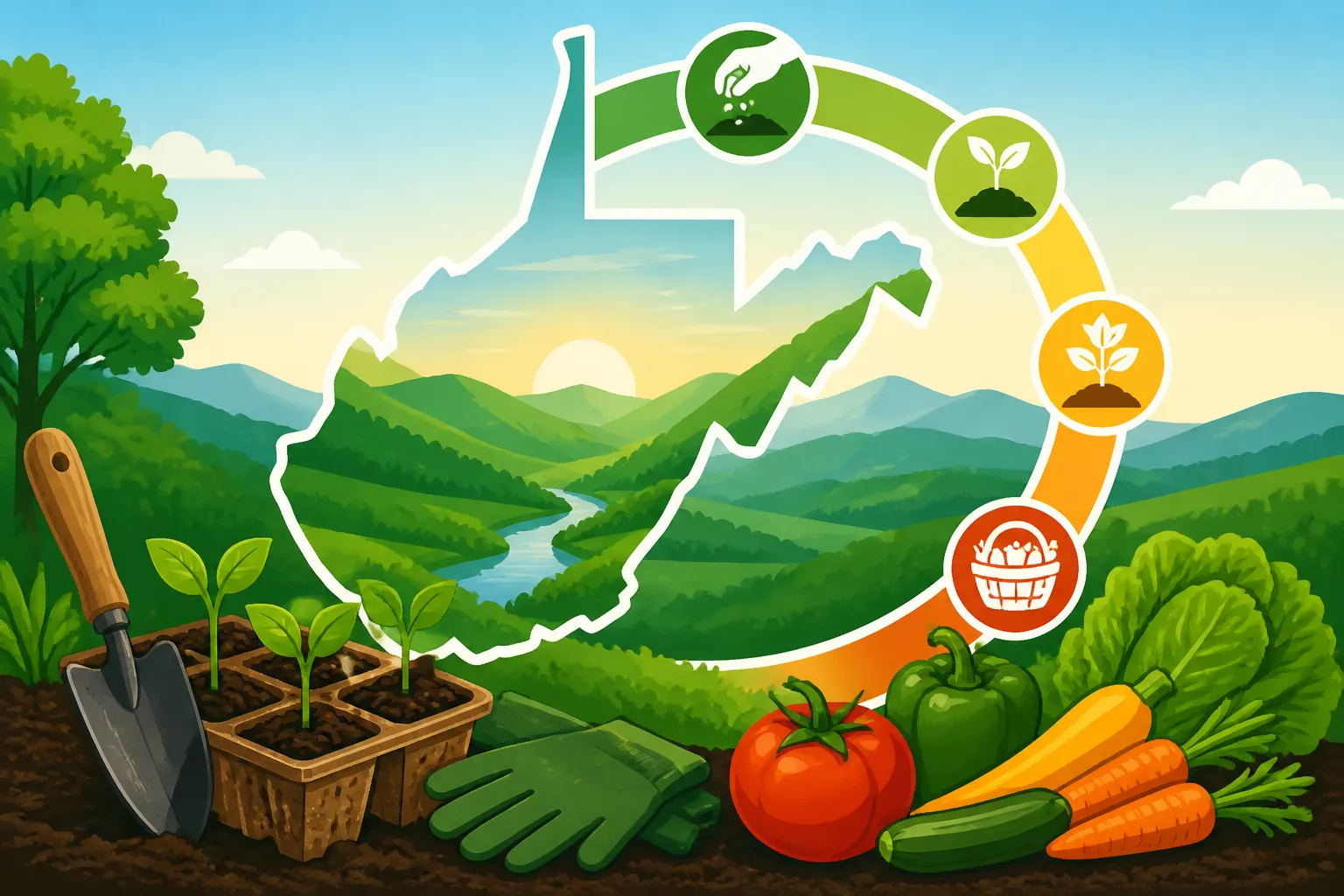
A step-by-step planning method
- List the crops you will actually eat. Start with a manageable number. A long list can make it harder to give every bed enough attention.
- Group them by temperature tolerance. Separate early cool-season crops from crops that need warmth.
- Choose the harvest order. Decide which crops should be ready first, which will follow, and which will supply food later in the season.
- Check each crop’s maturity information. Use the seed packet or supplier information as an estimate, not a promise.
- Match crops to beds. Consider sunlight, drainage, soil condition, and when the space will be available.
- Write down a flexible planting window. Avoid relying on one exact date for the entire state or every garden bed.
- Check weather and soil before planting. Adjust the plan if conditions are cold, wet, or unusually warm.
- Record what happens. Note planting, harvest, and any delay so you can make better decisions next season.
For a month-by-month overview of outdoor garden tasks, The West Virginia Garden Calendar: Month-by-Month Outdoor Work can help you organize the broader season. Pair that calendar with crop-specific guidance rather than treating a monthly list as a set of deadlines.
Common timing mistakes to avoid
- Planting tender crops because a calendar date has arrived. Check soil warmth, forecast, and crop tolerance first.
- Working soil when it is saturated. Waiting for the bed to dry can prevent compaction and make planting easier.
- Starting every crop at once. Staggered plantings can spread harvests and reduce waste.
- Using a single frost average as a guarantee. Averages describe past conditions; they do not promise a frost-free period.
- Forgetting that transplants need adjustment. Seedlings grown indoors or in a protected setting should be conditioned to outdoor conditions before planting.
- Sowing fall crops too late. Count backward from the likely end of the growing window and allow for slower growth.
- Planning only for planting day. Watering, weeding, harvesting, and replacing finished crops also take time.
- Ignoring the differences between beds. A wet low spot, exposed slope, and warm sheltered bed may each need a different schedule.
The most reliable planting calendar is not the one with the most exact dates. It is the one that helps you notice local conditions, choose crops suited to the season, and adjust when weather or growth does not match the plan.
Frequently Asked Questions
When should I start planting vegetables in West Virginia?
There is no single statewide start date. Cold-tolerant crops can go in when the soil is workable and conditions suit the crop. Tender crops should wait until the site and forecast are warm enough. Elevation, exposure, and drainage all affect the decision.
Is it safe to plant after the average last spring frost?
An average is not a guarantee that frost risk has ended. A cold night can still occur, and tender plants are more vulnerable than hardy crops. Check the forecast and consider the crop’s tolerance before planting.
How do I plan a fall vegetable garden?
Choose crops that can mature within the remaining growing window. Check the crop’s estimated days to harvest, account for slower growth during heat or cool weather, and plant early enough to leave a buffer before the expected end of the season.
Should I follow a calendar for my county?
A regional calendar is a useful starting point, but conditions can differ within a county. Use your garden’s elevation, slope, sunlight, drainage, and weather observations to adjust the suggested timing.
Disclaimer
This article is for general informational purposes only and does not constitute professional advice. Laws, prices and regulations vary by location and change over time. Consult a qualified professional for guidance on your specific situation. West Virginia Gardening Guide is not a government agency and is not affiliated with any university extension, state department of agriculture or other government agency.